

With over 40 years of experience in the construction industry, Vikanshu Petrochem has earned its reputation as a trusted leader, contributing significantly to infrastructure development across various regions.


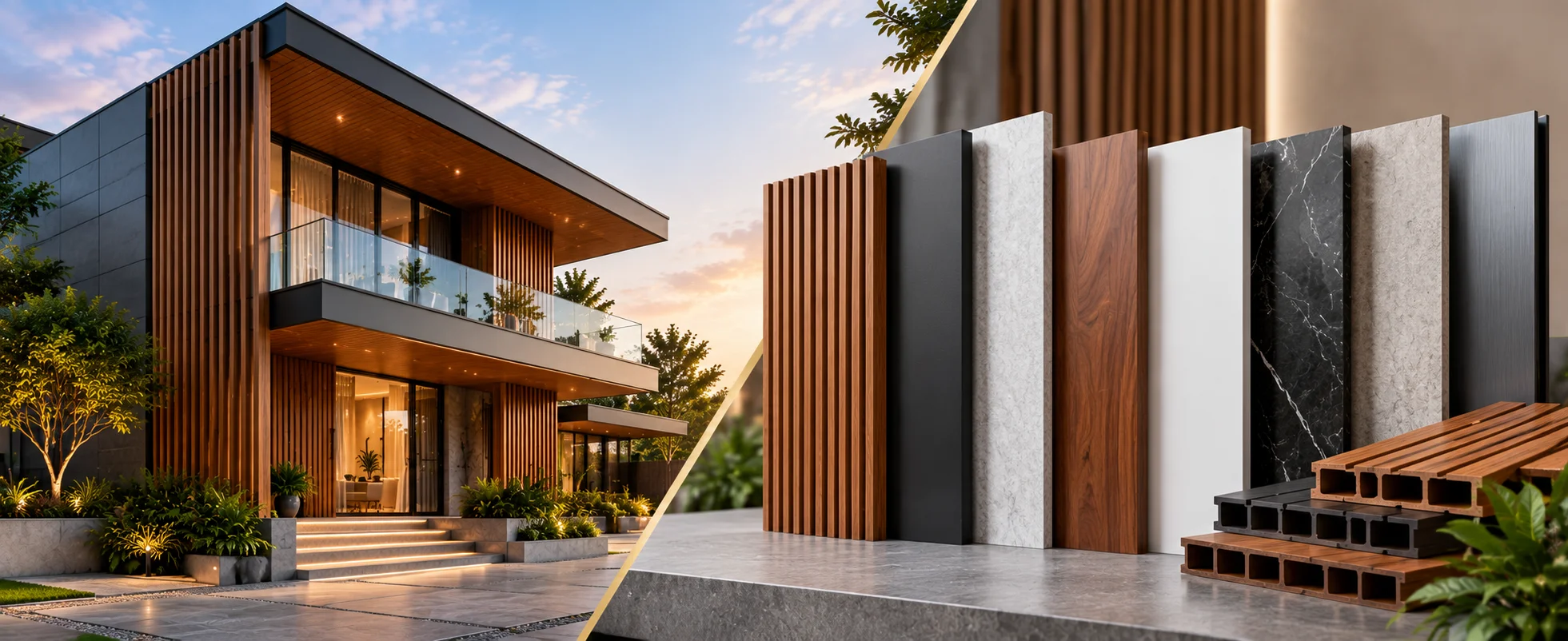
Choosing an architectural panel is not simply about selecting a colour or finish. The right solution depends on where the material will be used, environmental exposure, design requirements, maintenance expectations and the overall architectural concept. Modern architectural projects use a wide variety of panel materials. Depending on the application, designers may consider WPC, ACP, HPL, wall panels, soffit panels, louvers and other decorative surfaces. Aldeko’s product portfolio includes these different categories, giving architects and designers multiple material options for interior and exterior applications.
The first question should always be:
Where will the panel be installed?
For example, an exterior façade has different requirements from an interior feature wall.
Exterior applications may need greater consideration for:
Interior applications may focus more on:
The material should support the architectural style.
For a contemporary villa, designers may combine wood-inspired surfaces with stone, concrete and glass.
For an office, a combination of neutral panels, louvers and glass may create a clean professional environment.
For hospitality spaces, warmer finishes can help create a more welcoming atmosphere.
Texture is becoming increasingly important in contemporary architecture. Wood grain, fluted surfaces, linear louvers and textured finishes can create depth without complicated ornamentation.
Current Indian exterior design trends also show increasing interest in wood-look panels, earthy tones and louvered façades.
Avoid selecting every material independently.
Instead, create a complete palette:
Primary Surface → Accent Panel → Flooring → Ceiling → Lighting → Furniture
For example:
Warm Wood + Charcoal + Stone + Glass + Warm Lighting
can create a cohesive contemporary appearance.
A beautiful finish is only successful when it is appropriate for its intended application.
For exterior projects, material performance and environmental exposure should be evaluated alongside appearance. Aldeko’s WPC exterior cladding information specifically highlights resistance to weather, UV radiation, water and termites.
Selecting an architectural panel should be treated as a design and application decision, not simply a colour selection.
By considering location, environmental exposure, texture, finish, maintenance and the surrounding material palette, architects and designers can create spaces that look cohesive and perform appropriately for their intended use.